
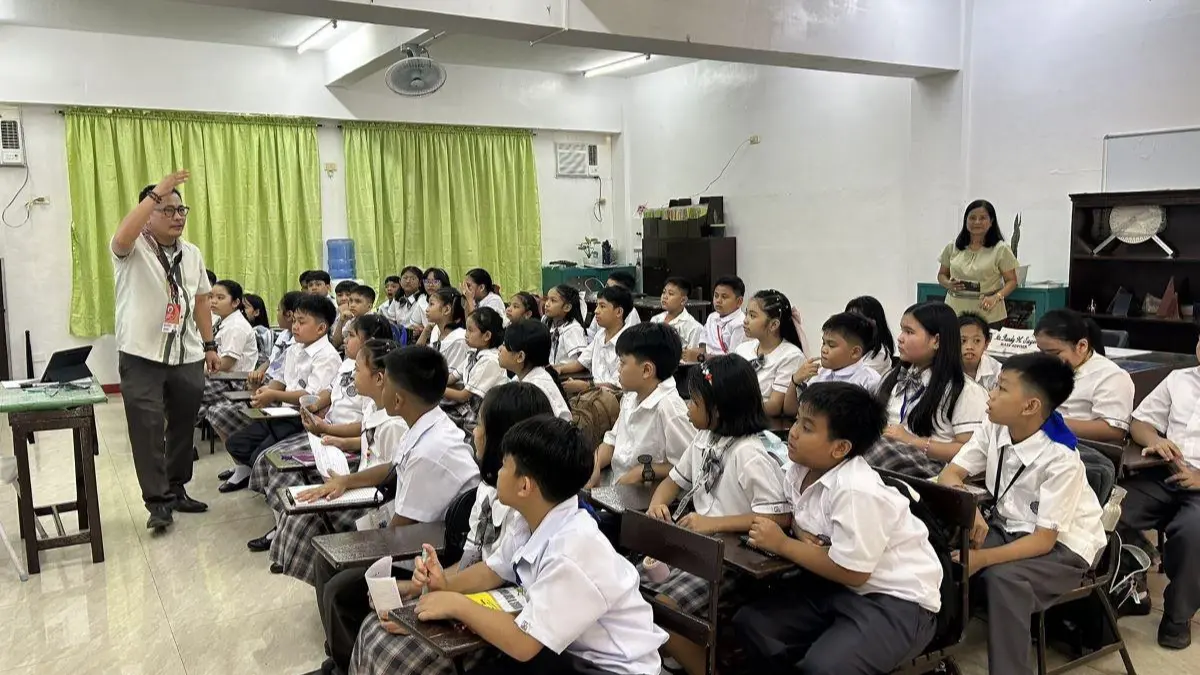
The Department of Education (DepEd) is studying the possible implementation of a “4+1” blended learning model to help address overcrowded classrooms in public schools.
Under the proposal, students will attend four days of face-to-face classes and one day of online learning each week.
Education Secretary Sonny Angara said the plan is one of several strategies being considered while the government continues to accelerate the construction of new classrooms.
Read Also: President Ferdinand Marcos Jr. Announces Free Calls for Filipinos in the Middle East
Classroom Shortage in Public Schools
According to DepEd, the Philippines currently faces a shortage of around 165,000 classrooms, which contributes to overcrowding in many public schools.
The proposal for blended learning was presented during the 2026 General Assembly of the League of Municipalities of the Philippines (LMP) in Pasay City, where Angara met with more than 1,300 municipal mayors.
The education chief emphasized the importance of working with local government units (LGUs) to solve the classroom shortage.
“Education is a shared responsibility, and our LGUs are important partners in ensuring that new classrooms are built for our learners,” Angara said.
DepEd Plans to Build More Classrooms
To address the classroom deficit, DepEd has outlined several infrastructure programs, including:
Construction of 30,000 classrooms through conventional procurement by 2028
- Building 16,000 classrooms in high-congestion areas through Public-Private Partnerships (PPP)
- Establishing additional learning spaces with support from the private sector
The department is also exploring the lease or acquisition of foreclosed private properties that could be converted into around 1,000 classrooms.
Expansion of the Voucher Program
DepEd is also studying the possible expansion of the education voucher program to primary school students.
This initiative may help reduce overcrowding in public schools by allowing more learners to enroll in private schools through government vouchers.
Faster Classroom Construction Through LGU Partnerships
Under the 2026 General Appropriations Act, local government units are now allowed to serve as primary implementers of school building projects, working alongside:
- Department of Public Works and Highways (DPWH)
- Armed Forces of the Philippines (AFP) Corps of Engineers
This partnership allows mayors to identify priority areas for classroom construction and repairs, which may speed up the implementation of infrastructure projects.
Pre-Fabricated Classrooms to Be Installed
DepEd is also promoting the use of pre-fabricated Learning Continuity Spaces, which are designed to be faster and more cost-efficient to build.
These classrooms have already been tested in Masbate and Davao del Norte.
For 2026, the government plans to install 2,571 units across 1,017 municipalities.
Read Also: DepEd: 4-Day Workweek Will Not Apply to Public Schools
DepEd and LGUs Strengthen Partnership
During the assembly, DepEd and the League of Municipalities of the Philippines signed a memorandum of understanding to strengthen cooperation in accelerating school infrastructure projects across the country.
The partnership aims to ensure that more classrooms will be built to support the growing number of learners in public schools.