Families struggling to afford private school may soon get help, as President Ferdinand Marcos Jr. has signed a law that makes the Department of Education’s (DepEd) voucher program permanent for Kindergarten to Grade 12 (K-12) students.
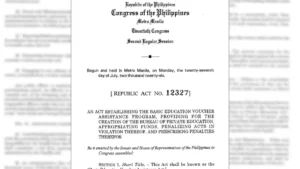
The measure, Republic Act No. 12327 or the Basic Education Voucher Assistance Act, was signed on November 12 and made public on Friday, November 20. DepEd welcomed the law and said it aims to roll out the program starting school year 2027-2028.
The law is meant to ease crowding in public schools while widening access to private schools. It also creates a new office under DepEd, the Bureau of Private Education.
DepEd first launched a voucher system in 2015 to help students from low-income families. The new law institutionalizes it.
How the voucher program works
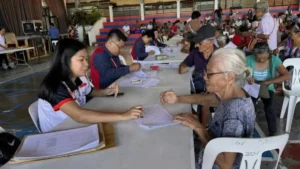
Eligible students receive financial assistance in the form of a voucher that states the amount needed to cover school fees at a participating private school. The value of each voucher ranges from ₱14,000 to ₱22,500, depending on the student’s location.
Qualified beneficiaries can choose their private school from a registry that lists available slots and the fees to be paid.
Who can receive a voucher
The program covers students from middle-income households and below. The law also sets priority groups:
- Students from public schools tagged by DepEd as congested
- Students living in areas with congested public schools
- Students in areas without a nearby public school
- Senior high school students in areas where public schools do not offer the subjects or electives that match their chosen pathway
Rules for schools and students
- Distance: The private school must be within a “walkable distance” of three kilometers from the student’s home.
- Admission: Participating private schools are considered to have waived their admission requirements for qualified beneficiaries, though they may adopt reasonable, transparent, and non-discriminatory retention policies.
- Assessment: DepEd will regularly assess private schools for them to stay in the program.
- Senior high school: Private schools with senior high school qualify if they offer subjects or electives that nearby public schools do not.
- Tuition increases: Participating schools may raise tuition only after a formal consultation with parents, and at least 70 percent of the increase must go to salaries, allowances, and other benefits of teaching and non-teaching staff.
Reactions
Karol Yee, executive director of the Second Congressional Commission on Education (Edcom 2), welcomed the law, saying vouchers can help decongest public schools if used strategically while the government works on the classroom backlog.
Sen. Bam Aquino, Edcom 2 co-chair, said the program is important for opening more opportunities to students crowded in public schools. He warned that its implementation should be closely watched to prevent irregularities and make sure priority goes to the children who need it most.
What we don’t know yet
The report did not say how families can apply, when applications will open, or what documents will be required. These details are expected in DepEd’s implementing guidelines, which have not been released. Parents are advised to watch DepEd’s official pages for announcements ahead of school year 2027-2028.